
Custom Next.js
Robgence
Physical AI Data Infrastructure
A custom Next.js website for Robgence’s physical AI data infrastructure, built from Figma designs.
Visit website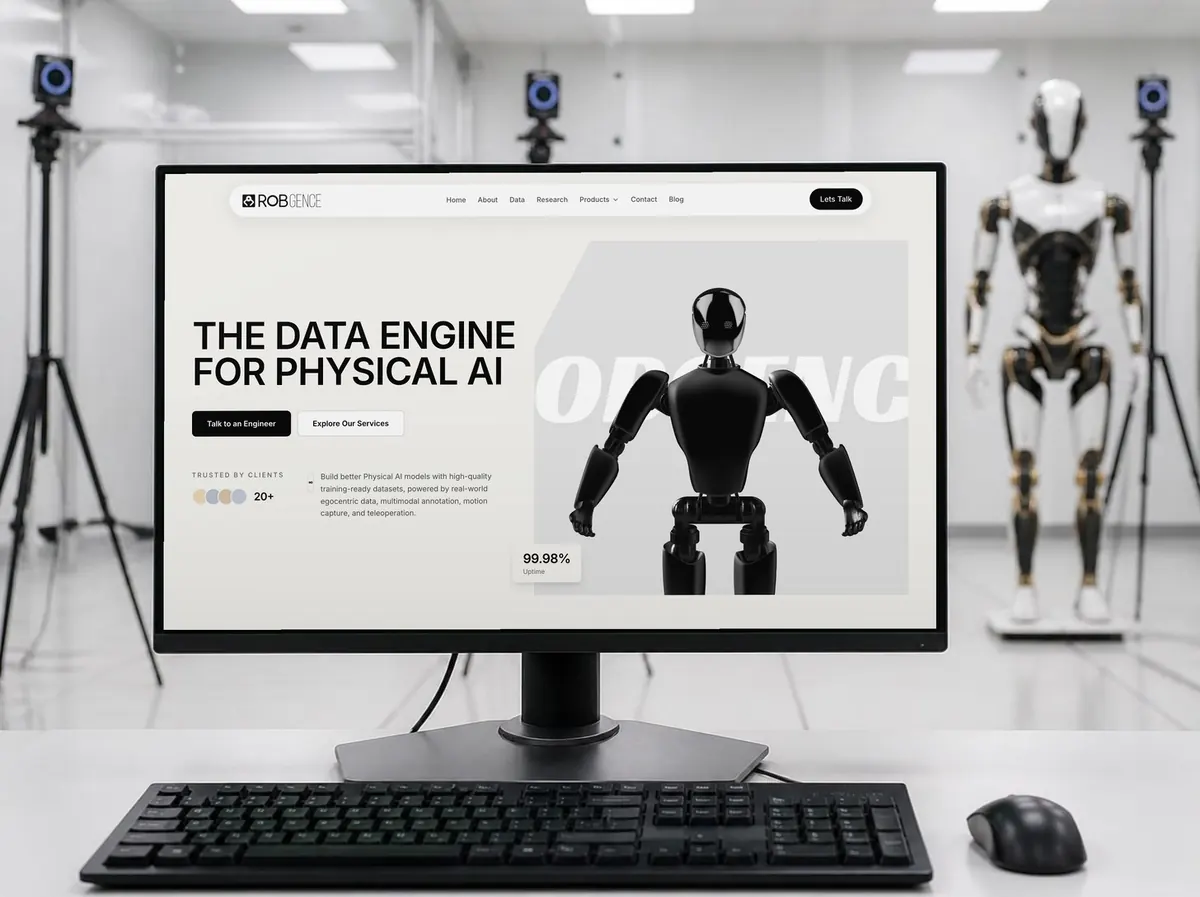
Robgence
Custom Next.js
Figma / Next.js / React / Tailwind CSS
01 / The story & screens
From the idea.
Into the details.
This is the production build, and it takes a sharper position than a typical corporate site. Rather than leading with services, it leads with a claim: physical AI is blocked on data, not models.
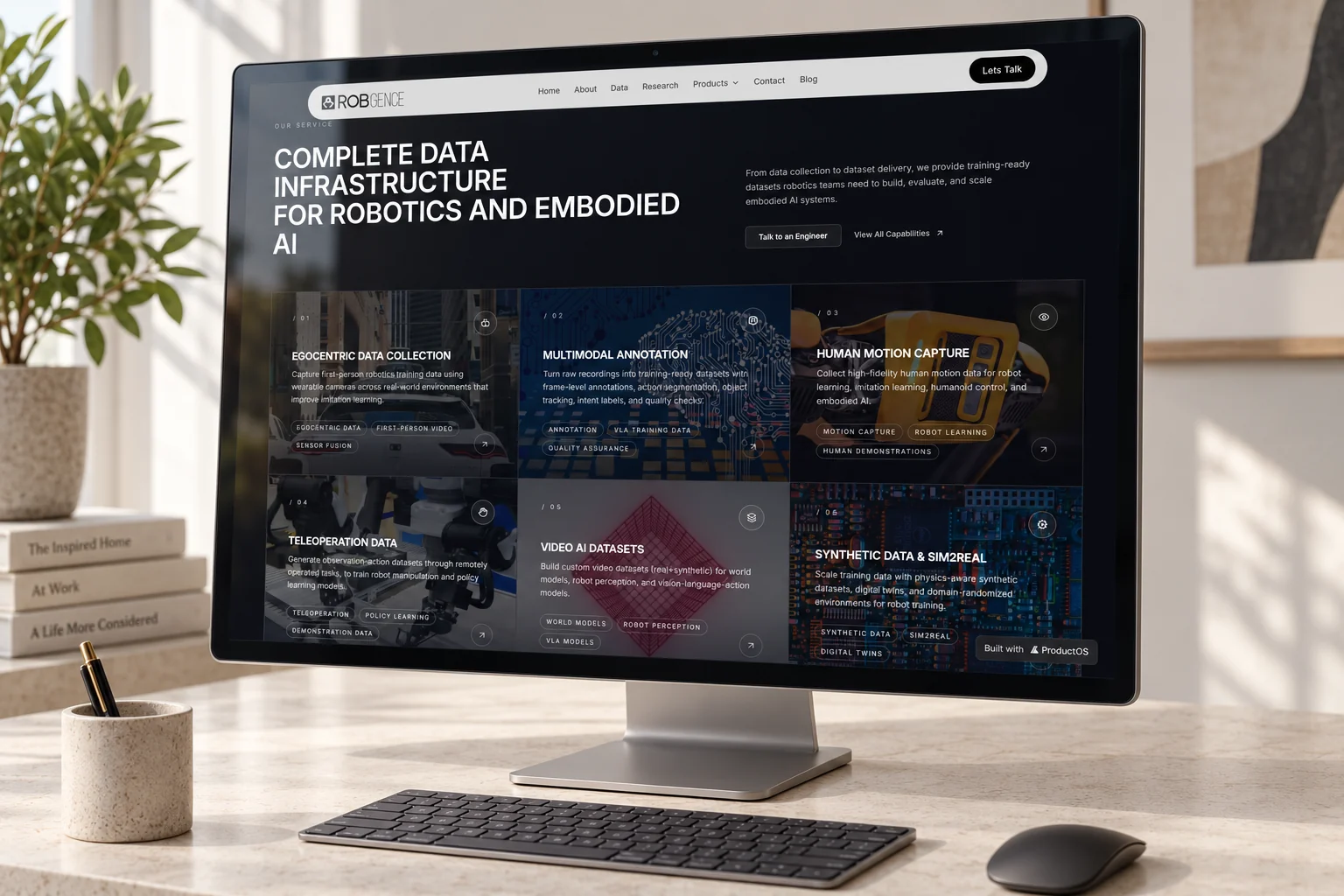
Everything follows from that argument. Six service areas — egocentric data, multimodal annotation, motion capture, teleoperation, video AI and synthetic data — are presented as the answer to it, backed by the line that ten hours of curated factory data outperforms ten thousand hours of lab footage.
Scale is the proof: a network of 20,000+ operators across 50+ cities, collecting across homes, factories, warehouses and farms. The treatment pairs dark backgrounds with bright accents, humanoid-robot photography and 3D renderings.
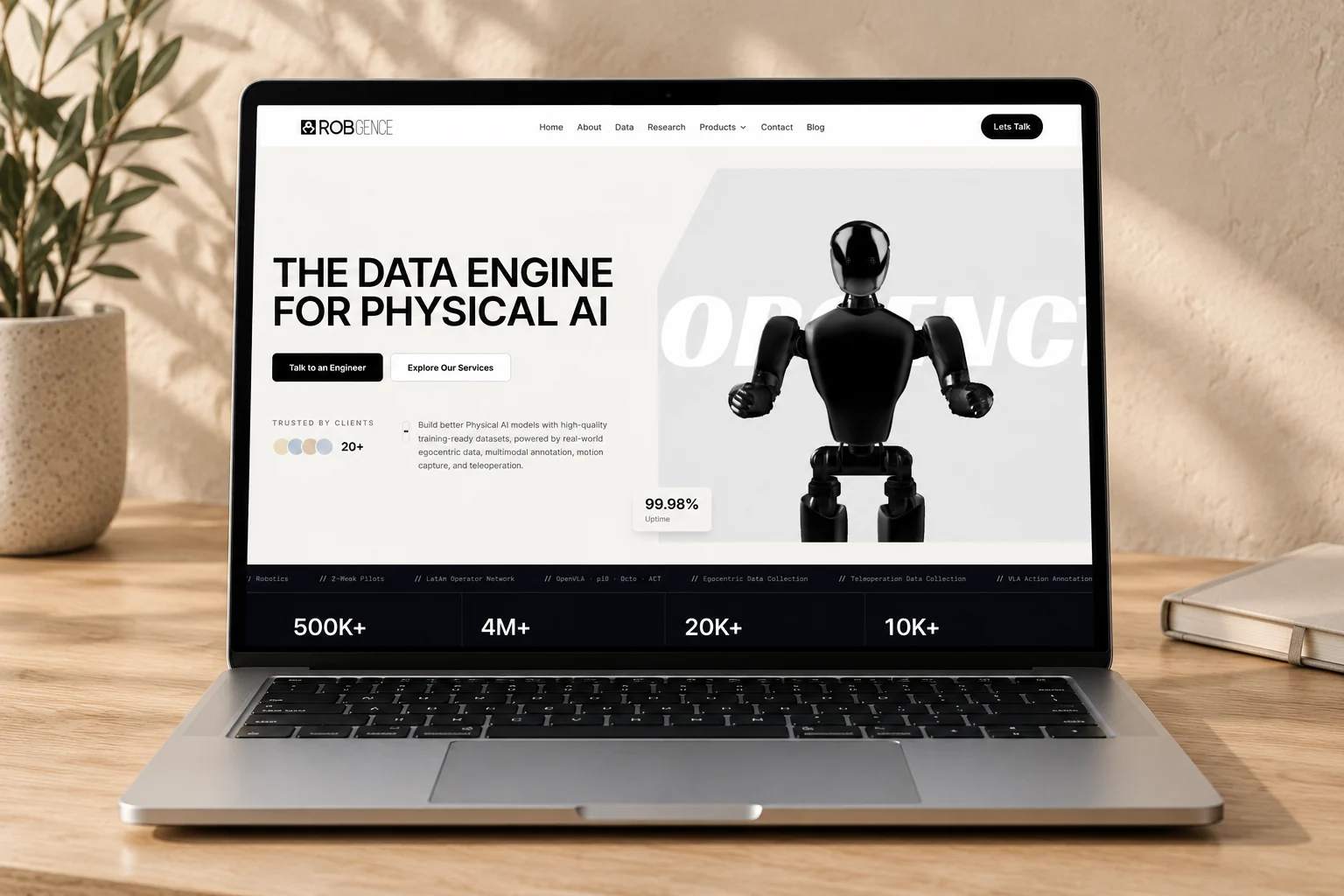
A direct introduction to Physical AI data
The homepage leads with Robgence’s data infrastructure message and two clear actions: explore services or speak to an engineer. The custom Next.js implementation translates the supplied Figma design into this company presentation.
Separate the six service areas
The service layout brings egocentric collection, annotation, motion capture, teleoperation, video datasets and synthetic data into a coherent grid. Each area has a concise explanation and a route into further detail.
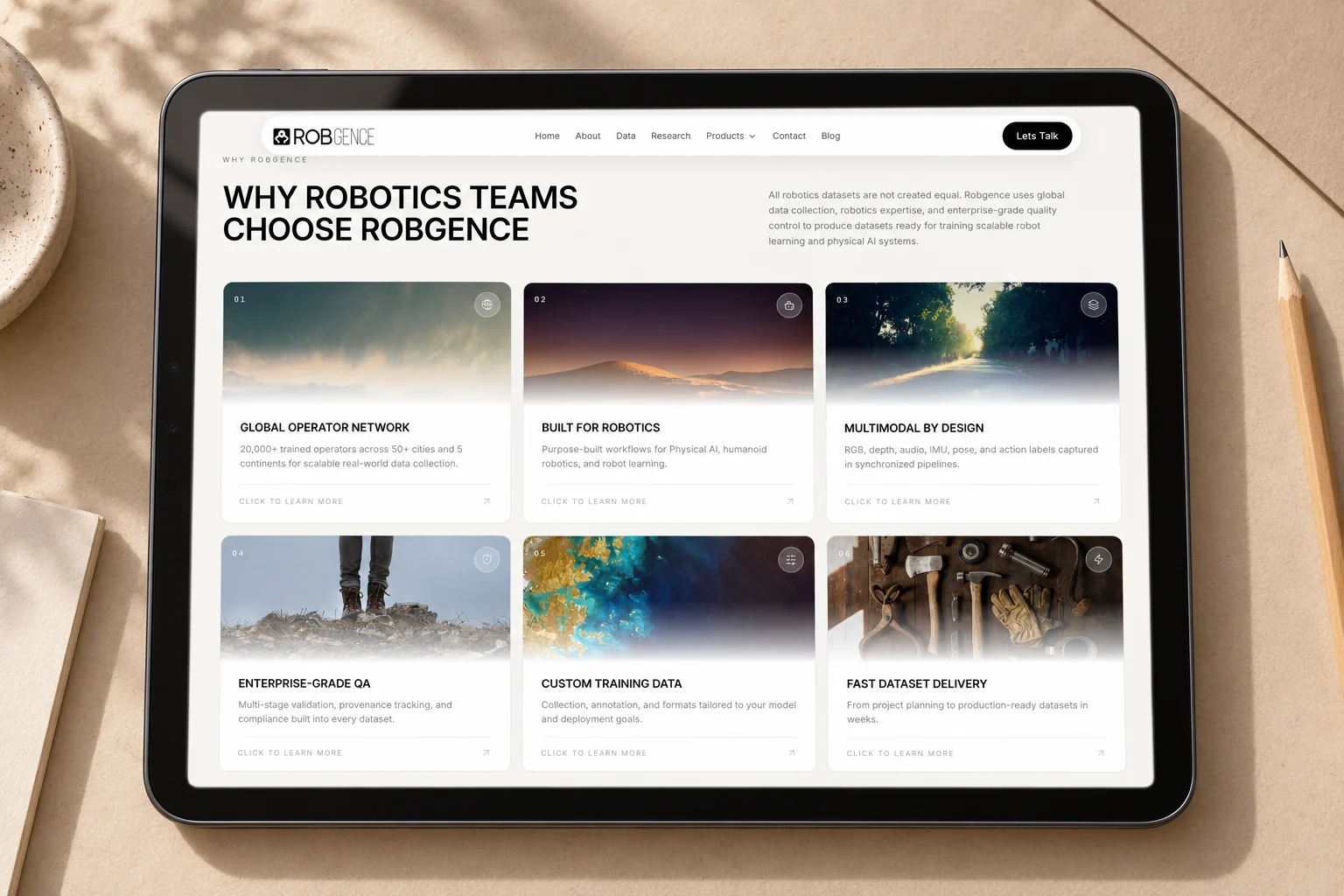
Explain why the delivery approach matters
The supporting section groups the operator network, robotics focus, multimodal collection and quality assurance into distinct cards. This structure gives technical buyers context around the services before the detailed FAQ and contact routes.
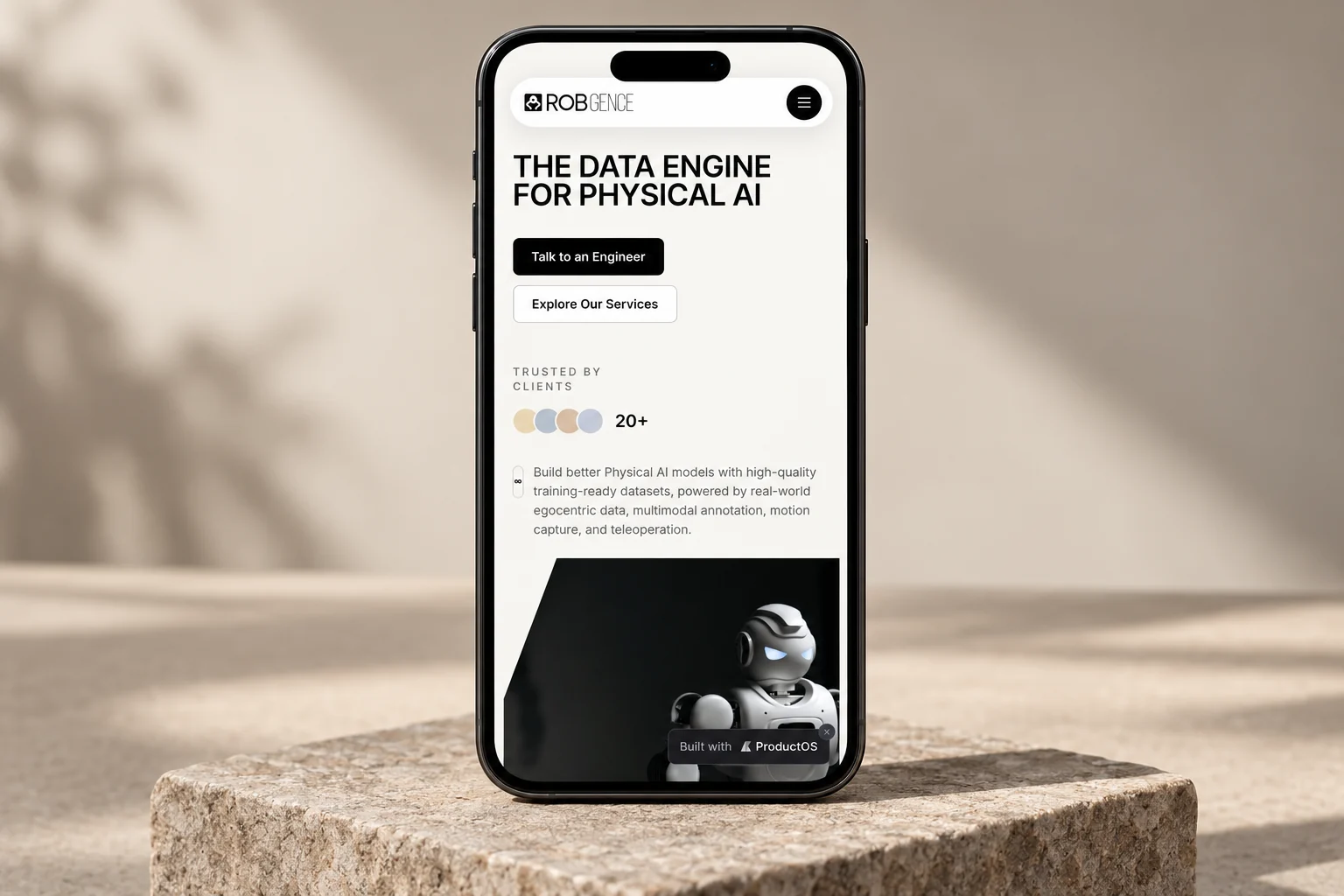
Carry the argument onto mobile
The mobile homepage keeps the data infrastructure headline, engineering action and service route at the top. The narrower layout preserves the sequence of the company story while adapting the typography and visual blocks.
02 / What we built
The work, delivered.
- Figma-to-production build
- Argument-led information architecture
- Six service-area presentation
- Global network and environment coverage sections
- Proof-of-work metrics and technical FAQ
.webp)


